












Playing Card Sizes: How to Choose Between Poker and Bridge
You're choosing a fresh deck for poker night. Should you keep the familiar wide cards, try a narrower pack, or look for bigger corner symbols for the players across the table? Card width and print size answer different needs. Both poker and bridge formats work for poker, so choose a playing card size based on how you handle the deck. The table below gives you the common dimensions.
Common Playing Card Size Dimensions
There's no single standard playing card size. COPAG's size and index FAQ describes these two common formats. Read the measurements as width × height for one card; metric figures use NIST's conversion of 25.4 mm per inch.
| Common Format | Inches | Millimetres |
|---|---|---|
| Poker / wide | 2.5 × 3.5 | 63.5 × 88.9 |
| Bridge / narrow | 2.25 × 3.5 | 57.15 × 88.9 |
Bridge cards are ¼ inch, or 6.35 mm, narrower at the same common height. Individual models can vary.
Bridge vs Poker Cards: Which Should You Choose?
Bridge size is a sensible starting point if you want less width to grip. Poker-size cards are a good fit if you prefer a wider card and find it comfortable to hold and shuffle.
If you already have a deck, use it for three quick checks. Pay attention to where the width feels awkward:
- Hold the whole deck. Pick it up and square the edges as you normally would before dealing. Notice whether your fingers have to stretch around its width or you keep shifting your grip to hold the stack together. Those are reasons to try bridge width.
- Shuffle your usual way. If reaching across the cards feels awkward, a narrower deck is worth comparing. If poker-size cards feel natural to shuffle and gather afterward, the wider format remains a reasonable choice.
- Consider the games you play. If you regularly hold several cards, check whether you can fan them comfortably. In Texas Hold’em, each player has only two private cards, so fanning is less central to the choice. Pay more attention to how the full deck feels when you shuffle, deal, and gather the cards.
When buying for a regular group, ask which card width your players find comfortable, including those who usually shuffle and deal.
You don't need an existing deck to decide. Bridge is a practical first choice if you want a narrower grip, especially when you expect to hold many cards. When buying for a regular group, ask which format your players already find comfortable.
Already have a deck? Lay one card flat and measure its short edge, then its long edge. Compare those measurements with the table to identify the format you already know.
Regular and Jumbo Index
The index is the rank and suit printed in a card's corners. Regular indexes are smaller; jumbo indexes are larger. This describes the markings, not the card's outer dimensions.
Judge readability in the places your group actually looks at the cards. In games where you hold several cards, check whether you can recognize the exposed corner symbols in a comfortable fan. For community cards, place a few face up in the middle of the table and look from your usual seat. Ask the other players to do the same. Cards that are easy to read in your hand may be harder to read from across the table.
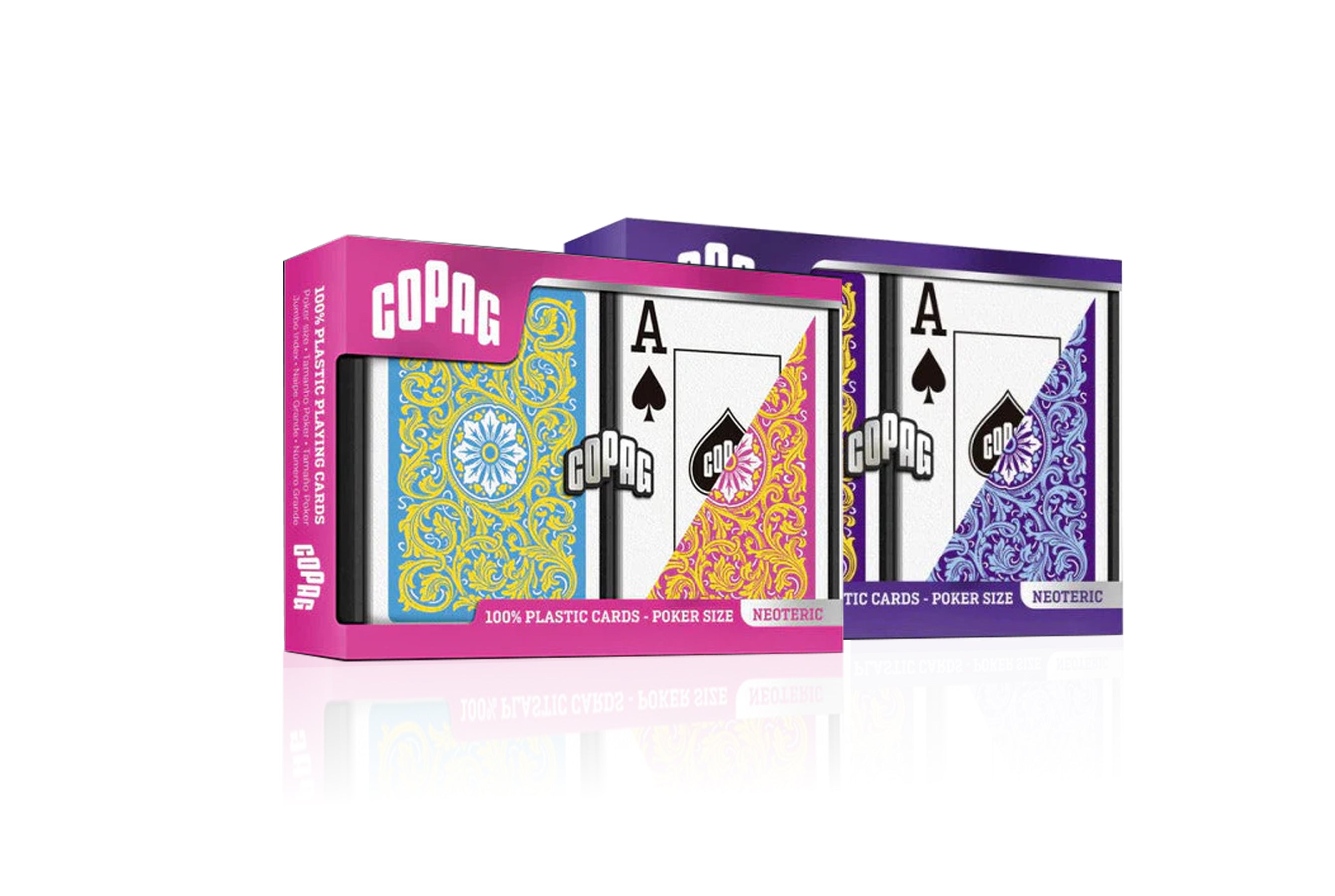
If your current deck feels comfortable to handle but players struggle to read the community cards, consider jumbo indexes in the same card size. Keep the two decisions separate: use handling comfort to choose the card width, then reading comfort to choose the index. The examples below show jumbo markings on both narrow and wide cards.
Three Decks to Match Your Choice
COPAG 1546 Bridge Size Red/Blue Jumbo Index

The COPAG 1546 set suits a player who wants a narrower grip without small corner markings. Its bridge-size cards pair the narrow format with jumbo ranks and suits, and the set contains one red deck, one blue deck, and a storage case. One deck can stay ready while the other is in play; the different backs help you keep them separate. The case keeps the pair together between games or when taking cards to a friend's house.
MRC Never Lose Poker Size Regular Index, Blue

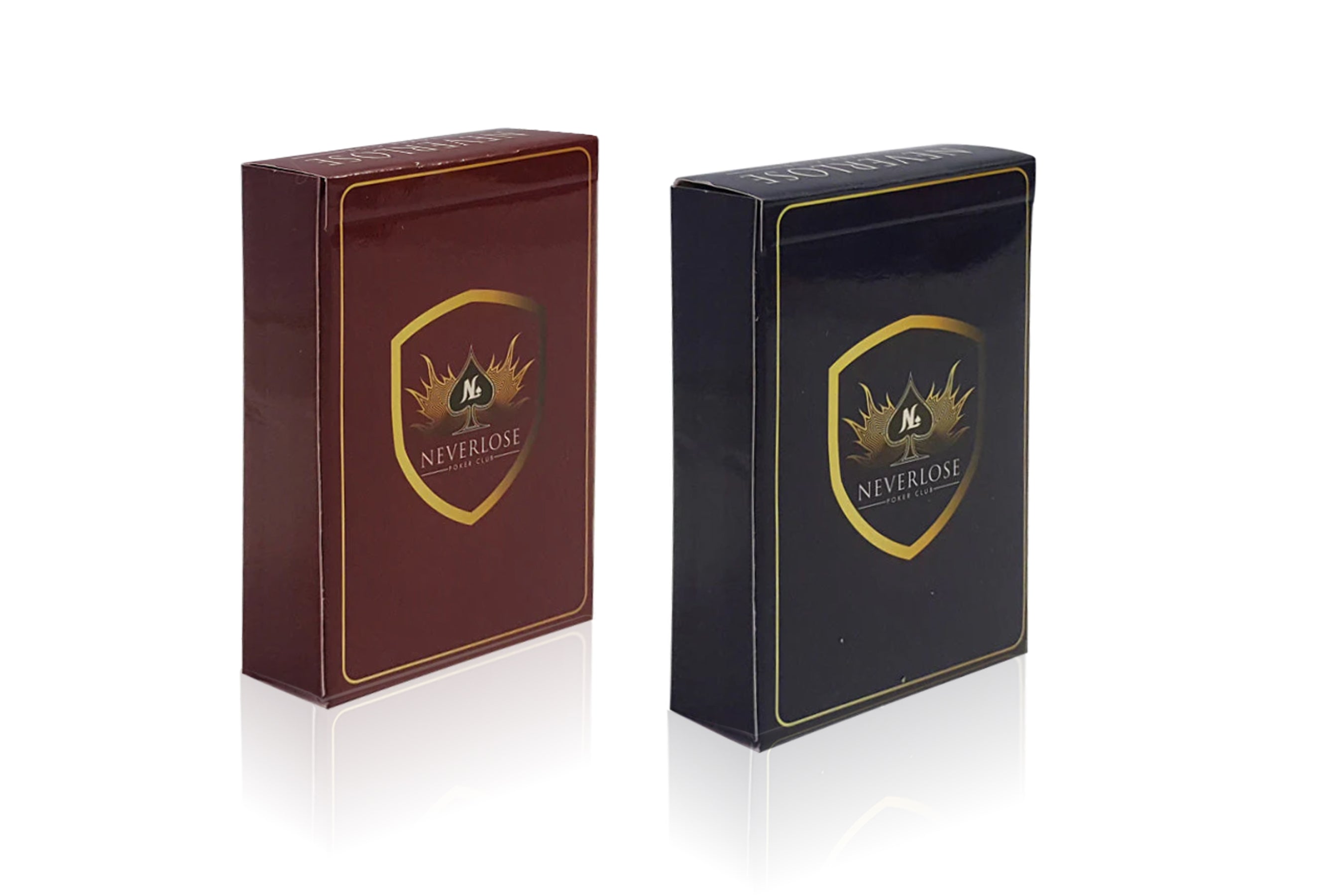
MRC Never Lose combines a 2.5 × 3.5-inch poker format with regular corner indexes. If your group already finds this width comfortable and can read regular markings easily, it offers a familiar size and index combination for your next deck.
COPAG Elite Poker Size Jumbo Index, Blue Single Deck

For a group that prefers poker-size cards but wants larger corner symbols, COPAG Elite combines the wide format with jumbo indexes. It comes as a single deck, suitable when you need one pack for your home game.
Choose Your Deck
Choose the width that feels comfortable in your hand and the corner markings your group can read easily. Browse MRC Poker’s playing-card collection to find the right combination for your next poker night.
FAQ
Do Bridge Decks Have Fewer Cards?
No. A normal bridge deck has 52 playing cards: four suits with 13 ranks each. The narrower format changes the card's width, not the number of ranks or suits.
Can You Use Bridge-Size Cards for Texas Hold’em?
Yes. Bridge-size cards can be used for Texas Hold’em. The size label describes the card's shape, not a restriction on which game you can play.
Are Jumbo-Index Cards Physically Larger?
No. Jumbo index means larger corner ranks and suits, not a larger card. Jumbo markings come on both poker-size and bridge-size cards.
Will Poker and Bridge Cards Fit the Same Card Holder or Shuffler?
Not necessarily. The two formats differ in width, so fit depends on the accessory's supported card dimensions. Check the card-width and card-height limits for the exact holder or shuffler model against the deck you're buying; a shared “standard” label isn't enough. For a card box, also check its internal storage space and deck capacity. A single card's width and height don't tell you whether there's room for the thickness of a full deck.


